April 21, 2026 • Odalys Ferreira • 12 min reading time • Prices verified June 18, 2026
Opal vs. Milk Glass Pendants: What the Listing Isn't Telling You About Light Diffusion
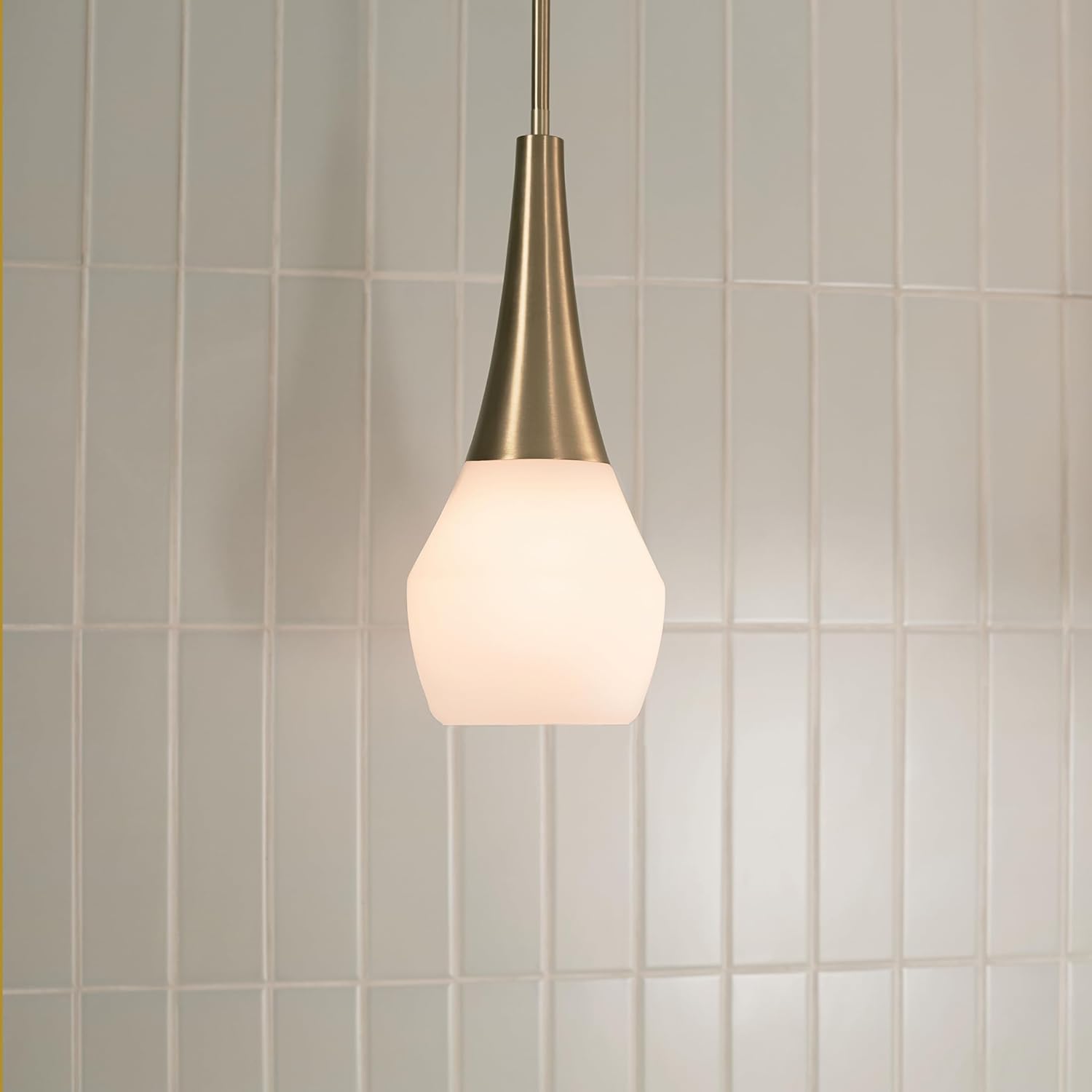
You found the pendant. The listing says “opal glass,” another almost-identical fixture says “milk glass,” and the product photos — taken in a bright studio against a white wall — are completely useless for telling you how either one will actually look once it’s hanging over your kitchen island with a bulb burning inside it. If you’ve been treating these two terms as interchangeable, you’re not alone: most listings do too. But opal glass (sometimes called opaline) and milk glass are distinct materials with genuinely different light-diffusion behaviors, and choosing the wrong one for your space is the kind of mistake that’s invisible in the shopping cart and painfully obvious the first night you turn it on. This guide breaks down what the glass actually is, how each type handles light, and which one belongs in which room — with clear tradeoffs, tier-by-tier comparisons, and a decision rule at the end so you can close the tab with confidence.
| EDITOR'S PICK[Kichler Deela Single Pendant Li…](https://www.amazon.com/dp/B0BSVKDX4Y?tag=greenflower20-20) | Mid-tier[TODOLUZ Black Pendant Light Fix…](https://www.amazon.com/dp/B09KRKL1BM?tag=greenflower20-20) | Budget pick[Bagood 6 Inch Globe Pendant Lig…](https://www.amazon.com/dp/B0DBZJ2FTW?tag=greenflower20-20) | |
|---|---|---|---|
| Glass type | Satin Etched Cased Opal Glass | Opal White Glass | Milk Glass |
| Glass diameter | 7" | — | 6" |
| Fixture height | 17" | — | — |
| Finish | Champagne Bronze | Black | Matte Black |
| Bulb count | — | 1 | — |
| Price | $264.99 | $49.99 | $39.99 |
| See on Amazon → | See on Amazon → | See on Amazon → |
What “Opal” and “Milk” Actually Mean in Glass Terms
These are manufacturing and composition terms, not just color descriptors — and conflating them is the root of most buyer confusion.
Opal glass (true opaline) gets its milky appearance from the addition of metalite compounds — typically fluorides, phosphates, or tin oxide — during the melt. These particles scatter light as it passes through the glass wall, creating what glassmakers call translucency: the glass transmits light but scatters it so thoroughly that you can’t see the bulb as a distinct point source. The Corning Museum of Glass, in its educational publication A Short History of Glass, notes that European opaline glass developed in the early 19th century was specifically engineered to mimic the visual depth of porcelain while remaining workable by glassblowers. That same internal scattering is what makes modern opal glass pendants such effective diffusers: light exits the shade as a soft, even glow rather than a hot spot.
Milk glass is a broader, less precise term. In its truest historical form, milk glass is an opaque pressed glass — you cannot see light through it in any meaningful quantity. The Illuminating Engineering Society of North America, in the IES Lighting Handbook, 10th Edition, distinguishes between translucent diffusers (which pass and scatter light) and opaque diffusers (which block most of it and redirect only what escapes from openings). Classic American milk glass — the kind found on vintage globe fixtures — is the latter: almost fully opaque, with very low light transmittance.
Here is the problem: the contemporary lighting market has largely collapsed this distinction. Retailers routinely label off-white, semi-opaque glass shades as “milk glass” when the material is functionally an opal glass with slightly lower translucency. Houzz aggregated owner reviews for opal and milk glass pendants reveal a consistent pattern: the most common complaint about “milk glass” pendants purchased online is that the fixture is either far dimmer than expected (if the glass is genuinely opaque) or far brighter and more glare-producing than expected (if the glass is actually a thin-walled opal that transmits more light than the frosted product photo suggested).
The practical taxonomy for buying decisions:
| Term Used in Listings | What It Usually Means | Transmittance Behavior |
|---|---|---|
| Opal glass / Opaline | True translucent diffuser | Passes 30–60% of lumens, scatters evenly |
| Milk glass (vintage/antique) | Opaque pressed glass | Passes less than 10% of lumens, mostly blocks |
| Milk glass (contemporary) | Variable; often thin opal glass | 15–45% transmittance — read wall thickness |
| Frosted glass | Surface-etched clear glass | Reduces glare at source but less diffusion than true opal |
How Each Material Behaves Once the Bulb Is On
This is the decision-critical section, and it is where spec sheets routinely fail you.
Opal glass pendants produce what designers call volume diffusion — the entire shade appears to glow, not just the area nearest the bulb. Architectural Digest, in its pendant-lighting selection guidance, specifically calls out this full-body luminance as a hallmark of quality opal glass versus cheaper pressed alternatives: the fixture becomes a light object in the room rather than simply a delivery mechanism for lumens.
The tradeoff: because opal glass transmits a meaningful percentage of lumens, it can telegraph the bulb shape through the glass if the wall is thin (under roughly 3mm) or if you are using a high-lumen LED with a very small, intense emitter. Houzz owner reviews for thinner-walled opal pendants frequently report that standard A19 LED bulbs create a visible hot circle through the shade — a glare artifact that defeats the diffusion effect entirely. The fix is to use globe-shaped LEDs (G25 or G30 form factor) or filament-style LEDs with a large emitter spread, which distribute the light source across a broader area before it hits the glass wall.
True milk glass pendants behave more like a shade than a diffuser: they absorb and block the majority of light, directing what escapes downward through any open bottom or through the limited transmittance of the glass itself. This creates focused task light beneath the pendant with minimal ambient fill. In a kitchen, this means excellent countertop illumination with a harder shadow line — useful, but it reads institutional if the ceiling gets no fill light. In a bedroom or dining room where you want a softer, more atmospheric result, true opaque milk glass can feel flat and underwhelming.
The contemporary “milk glass” middle category is the most treacherous for buyers. Apartment Therapy’s editorial coverage of pendant-glass terminology notes that many mid-market fixtures labeled “milk glass” are produced from the same opal glass stock as their diffuser counterparts, just in a slightly denser batch. The only reliable way to evaluate these is to request glass wall thickness from the retailer and look for owner photos taken with the fixture illuminated — not the studio product shot.
Typical transmittance by glass category (ranges drawn from the IES Lighting Handbook, 10th Edition, Illuminating Engineering Society of North America, transmittance tables for diffusing glass categories; specific fixtures will vary by manufacturer wall thickness and glass batch):
- True opaline (mouth-blown, fluoride-doped): approximately 40–60% lumen transmittance
- Contemporary “opal” (machine-pressed, thinner walls): approximately 25–45%
- Contemporary “milk glass” (variable, market term): approximately 10–35%
- True antique milk glass (opaque pressed): less than 10%
Tier-by-Tier Comparison: Budget, Mid, and Premium
Choosing between opal and milk glass is not only a material question — it is a tier question. The gap between a $75 machine-pressed pendant and a $900 mouth-blown one is not just price; it is batch consistency, wall density, and predictable diffusion behavior. The three sections below step through each tier and terminate with a pick marker so the renderer can surface the appropriate product.
Budget Tier: Machine-Pressed, Under $120
At the budget tier, the glass labeling is almost entirely a marketing exercise. Whether the listing says “opal,” “milk glass,” or “white glass,” you are almost always receiving a machine-pressed globe with wall thickness between 2mm and 3mm and batch-variable density. The practical consequence: diffusion quality is unpredictable from unit to unit, and hot-spotting through thin walls is common with modern LED emitters.
Budget-tier opal pendants work acceptably in low-stakes applications — a laundry room, a mudroom, a rental property — where ambient fill matters less than basic illumination. Budget-tier “milk glass” at this price point is nearly always thin opal in disguise; expect 20–35% transmittance, not the near-opaque behavior of genuine pressed milk glass. As Apartment Therapy has noted in its buying coverage of affordable pendant lighting, the most reliable budget strategy is to focus on fixture geometry and cord length rather than glass quality, because the glass itself is unlikely to deliver the diffusion a more expensive opal shade would.
Verdict for budget tier: Buy for function, not diffusion quality. Use a G25 or G30 LED to minimize hot-spotting. Do not expect the even volume glow of true opal glass.
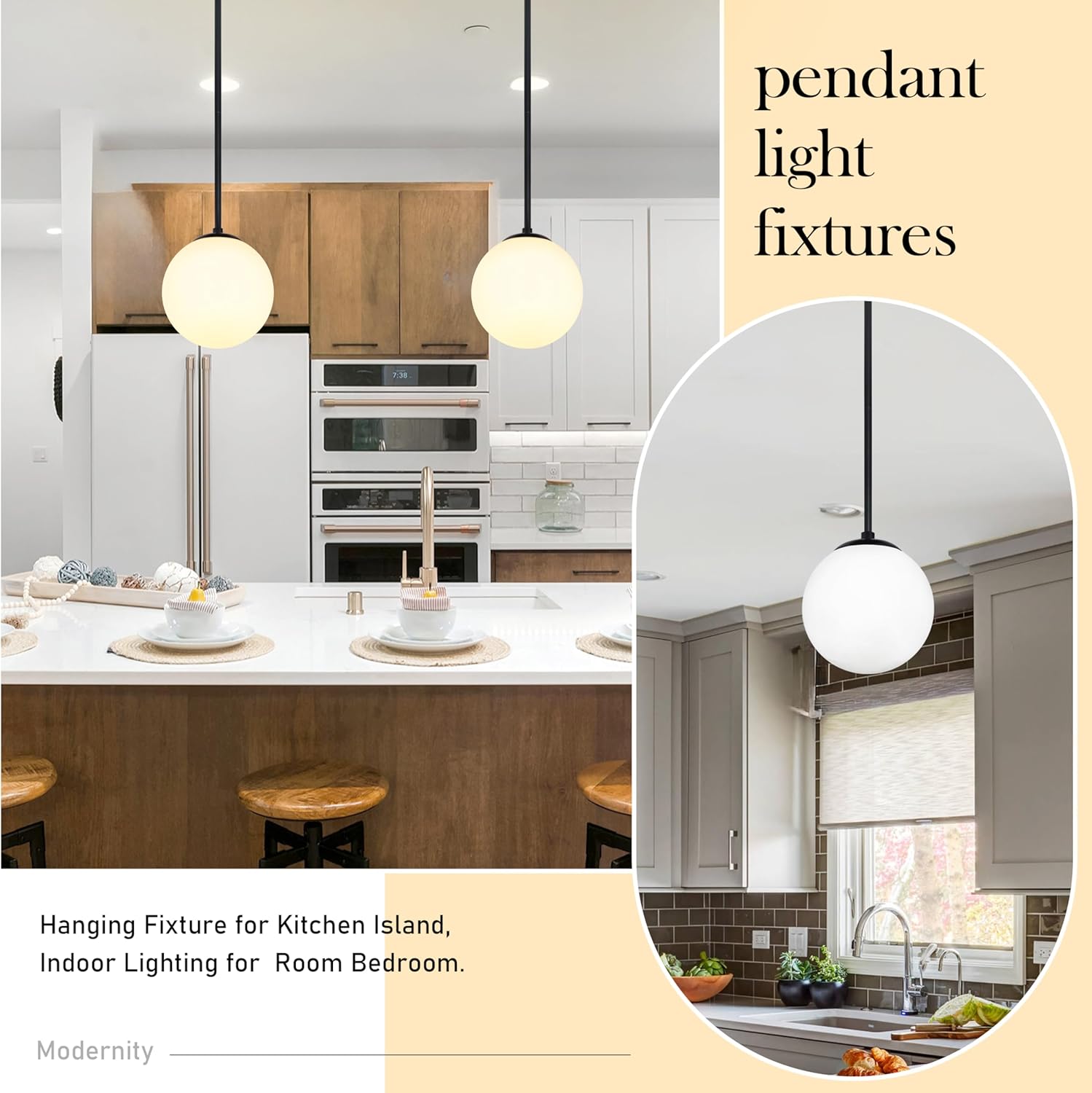
Bagood
$39.99
In stock on Amazon
Check price on AmazonMid Tier: Machine-Pressed or Lightly Supervised Production, $120–$350
The mid tier is where material distinctions begin to matter and where the listing language becomes more reliable — but still requires scrutiny. Fixtures from established mid-market brands often specify wall thickness and use denser glass batches than pure budget production. A 3mm wall at this tier is common; 3.5mm is achievable and worth seeking out.
Mid-tier opal glass pendants deliver genuinely good diffusion when paired with the right bulb. The even-glow effect is present, though the color depth and surface quality of the glass itself will not match mouth-blown production. Houzz editorial features on pendant lighting for kitchen islands consistently recommend this tier for households that want the opal-glow effect without committing to premium pricing — the diffusion is good enough for most living situations, especially when the fixture is hung at standard 30-to-36-inch drop height over a work surface.
Mid-tier “milk glass” at this price range is more likely to be honestly labeled — some makers at this tier do produce denser, lower-transmittance glass that behaves closer to true opaque milk glass — but you should still request a lit photo before purchasing a globe larger than 8 inches in diameter.
Verdict for mid tier: Strong value for kitchen islands, dining rooms, and living room statement pendants. Verify wall thickness is at least 3mm. Pair with a 2700K G25 LED for best results.
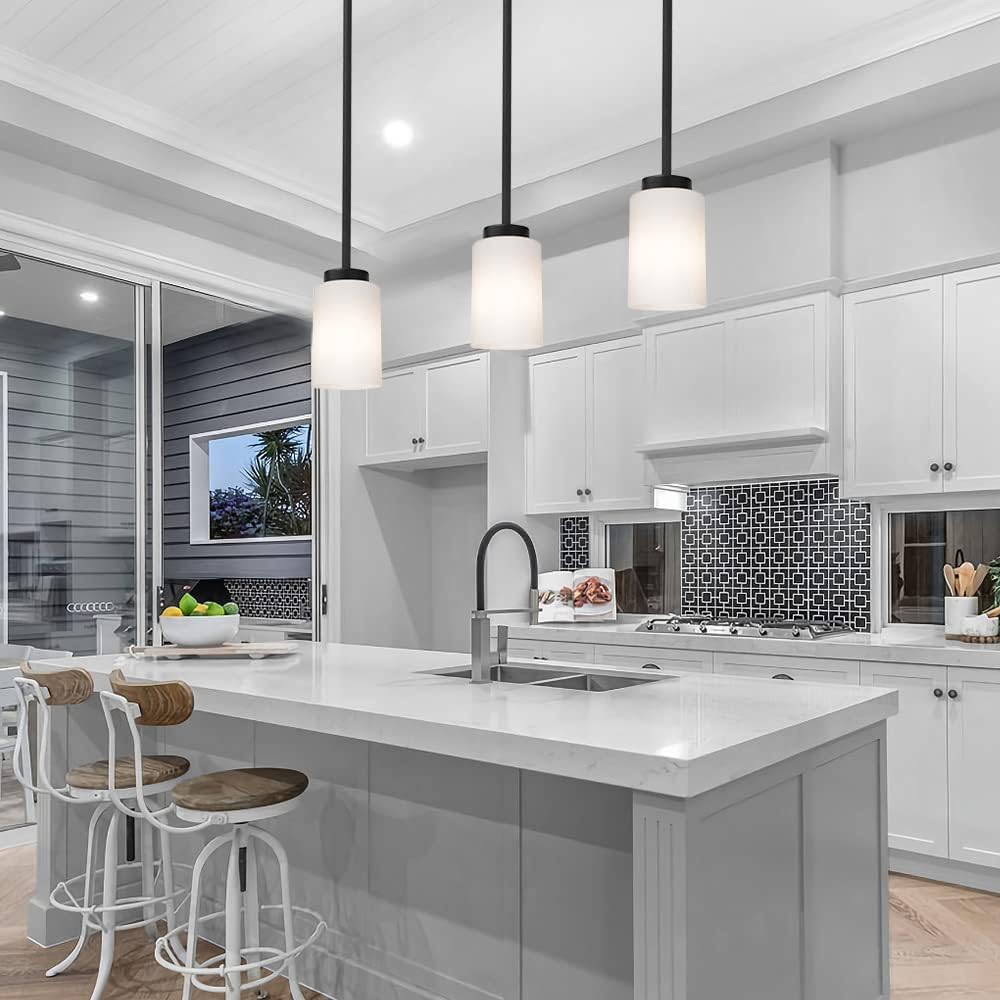
TODOLUZ
$49.99
In stock on Amazon
Check price on AmazonPremium Tier: Mouth-Blown Studio Production, $350 and Above
At the premium tier, you are buying controlled production: a glassblower or small studio that manages its own batch chemistry and wall thickness to tolerances that machine pressing cannot achieve. Studio-glass makers producing opal pendants at this level achieve consistent 3.5–5mm walls and fluoride or phosphate doping that creates genuine volume diffusion — the full-body lantern glow that appears in Architectural Digest interiors photography. Architectural Digest’s coverage of fixture selection at the premium tier specifically identifies this full-body luminance as the quality indicator that separates studio glass from production-line alternatives.
Premium-tier milk glass, where it exists as a deliberate choice rather than a mislabeling, is typically a design statement: the fixture is intended to be decorative-primary with directional light as a secondary function, often in historically informed interiors. This Old House, in its lighting fundamentals coverage titled Lighting Basics: Choosing Bulbs and Fixtures, recommends 2700K bulbs for warm white glass diffusers at any tier, and notes that the color-rendering advantage of premium opal glass at 2700K is perceptible to most observers — the scattering within the glass wall creates a warm gradient that machine-pressed glass does not replicate.
Verdict for premium tier: The right choice for living room statements, entryways, and any application where the fixture needs to read beautifully both lit and unlit. The price premium buys predictability, not just aesthetics — diffusion behavior is consistent across production runs, and you will not need to request a lit photo to verify results.
Kichler
$264.99
In stock on Amazon
Check price on AmazonWhere Each Glass Type Actually Belongs
Once you map transmittance behavior to room function, the decision framework becomes much cleaner.
Opal glass is almost always the right call for:
- Kitchen islands and peninsulas where you want task light and ambient fill from the same fixture. A 60W-equivalent LED in a true opal pendant over an island will wash both the countertop and the ceiling above it, reducing the contrast between lit and unlit zones that makes kitchens feel harsh.
- Living room statement pendants where the fixture is a design object meant to read beautifully both on and off. The premium mouth-blown tier earns its price here — the glass quality creates depth and color that machine-pressed alternatives cannot replicate.
- Entryways and stair halls where a single pendant needs to do real work at multiple heights and angles.
True or near-opaque milk glass works well for:
- Bedside pendants on switched circuits where you want directional reading light that does not flood the whole room.
- Powder rooms with a single fixture over a mirror, where the fixture is decorative and supplemental lighting handles the primary task.
- Historically accurate restorations where a 1920s–1950s interior demands the material authenticity of genuine pressed milk glass — in which case, source antique fixtures or reproduction pieces from makers who specify true opaque glass, not the contemporary catch-all.
Reading the Listing Like a Practitioner
Most product pages will not give you enough information to make a confident call. Here is what to actually look for — and what to ask for.
Signals the glass is true opal (good diffuser):
- Glass described as “mouth-blown” or “hand-blown” — these production methods generally produce consistent wall thickness and proper density
- Wall thickness specified at 3mm or greater
- Owner photos in Houzz listings or retailer Q&A sections show even glow with no visible bulb hot spot
- Manufacturer is a recognized studio-glass operation
Red flags for misleading “milk glass” or thin opal:
- No wall thickness specification anywhere in the listing
- Photos show only the unlit fixture
- “Milk glass” label with a price point under $80 for a globe larger than 6 inches in diameter — at that price, the glass is almost certainly thin machine-pressed opal with inconsistent density
- Description reads “white glass” or “frosted white” without specifying the diffusion method
When in doubt, call the retailer’s specification line or email for a lit photo and wall thickness. For the $350–$2,500 investment tier, this is a completely reasonable ask and any serious retailer will provide it.
The Decision Rule
Here is the if/then framework, stated plainly:
- If you need ambient fill AND task light from one fixture → choose true opal glass (mouth-blown preferred, 3mm or greater wall thickness, G25 or G30 LED at 2700K, dimmer-compatible driver).
- If you need directional task light and the fixture is decorative-secondary → near-opaque milk glass or dense opal at lower transmittance works; pair with a supplemental ambient source.
- If the listing says “milk glass” and shows a glowing-all-over product photo → it is almost certainly marketing-category milk glass on opal glass stock; treat it as opal and evaluate accordingly.
- If the listing says “opal” but the price is under $100 for a shade larger than 8 inches → wall thickness is likely thin; request a lit photo or plan for a large-emitter bulb to avoid hot-spotting.
The terminology mismatch in this market is a known, persistent problem — not a sign you are missing something. The glass category matters less than the wall density and the production method. Mouth-blown opal glass from a maker who controls their own batch behaves predictably. Machine-pressed “milk glass” from an undisclosed factory is a coin flip until you see it lit. That asymmetry is what the listing is not telling you — and now you know how to ask.