May 26, 2026 • Odalys Ferreira • 9 min reading time • Prices verified June 18, 2026
Brass Finish Glass Pendants: Aged, Antique, Champagne, and Unlacquered — Which One Are You Actually Getting?
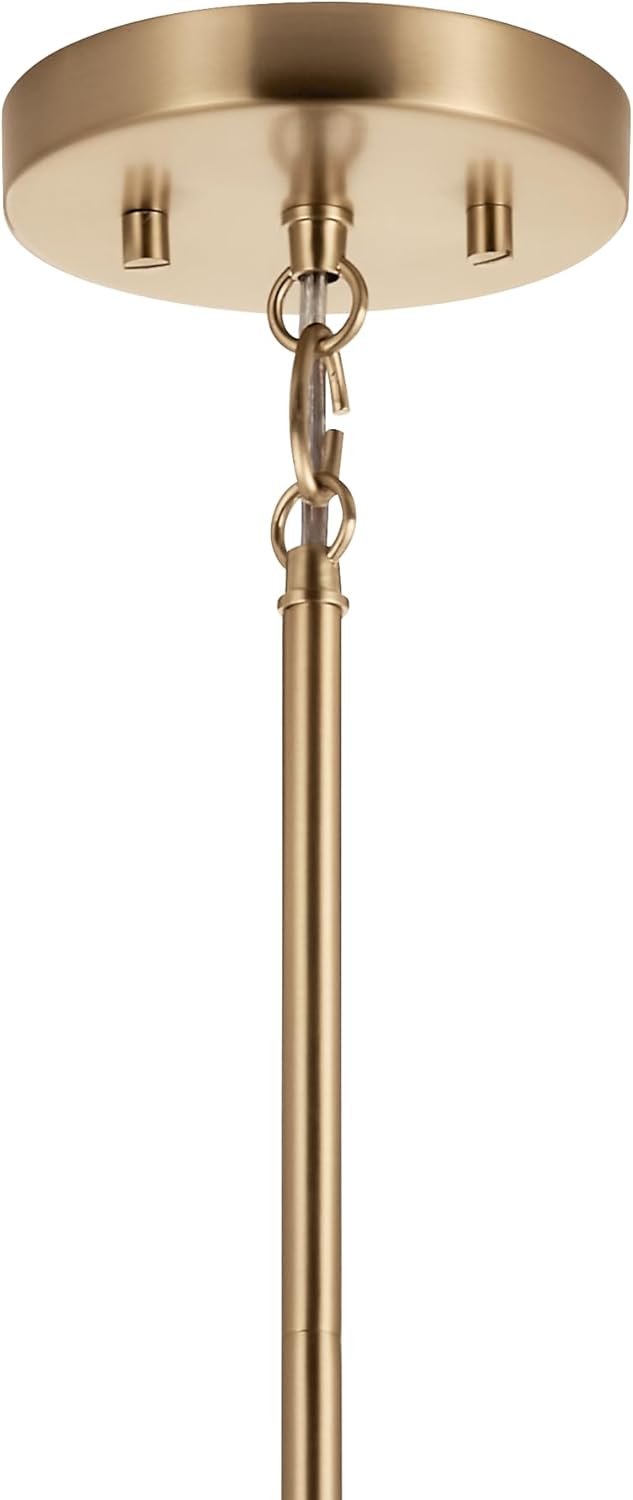
You’ve found a glass pendant you love — the proportions are right, the seeded glass is exactly what you pictured, and the warm metal finish in the product photo looks perfect against your white oak cabinetry. Then you notice the listing says “aged brass.” A different retailer sells what looks like the same finish under “antique brass.” Another calls it “champagne.” And somewhere in your browser tabs there’s a Visual Comfort fixture described as “unlacquered brass” — which sounds like it might tarnish, or maybe that’s the point? These terms are not interchangeable, and getting them wrong doesn’t just cause a return — it means a finish that looks dull or orange in your lighting conditions, or one that changes color over three years in ways you weren’t prepared for. This article breaks down exactly what each label means, which ones are factory-applied and stable versus alive and evolving, and how to make the right call for your specific space and tolerance for maintenance.
| EDITOR'S PICK[Kichler Deela Single Pendant Li](https://www.amazon.com/dp/B0BSVKDX4Y?tag=greenflower20-20)… | Mid-tier[CASAMOTION Pendant Lights Kitch](https://www.amazon.com/dp/B09ZV21LXD?tag=greenflower20-20)… | Budget pick[CASAMOTION Glass Pendant Light](https://www.amazon.com/dp/B0DLRQ69TY?tag=greenflower20-20)… | |
|---|---|---|---|
| Glass type | Satin Etched Cased Opal | Clear Organic Globe | Clear Organic Globe |
| Diameter | 7" | 8" | — |
| Height | 17" | — | — |
| Finish | Champagne Bronze | Brass | Gold |
| Price | $264.99 | $139.50 | $72.50 |
| See on Amazon → | See on Amazon → | See on Amazon → |
The Core Distinction: Coated vs. Living Finishes
Before drilling into individual labels, the most important split to understand is this: some brass finishes are sealed with a lacquer (a clear protective coating applied at the factory), and some are not. That single variable determines almost everything else — how the finish looks now, how it behaves in five years, and how much attention it needs from you.
Lacquered brass finishes are factory-applied, stable, and intentional. The manufacturer deposits a patina — either chemically or mechanically — and then seals it under clear lacquer so it stays exactly that color. What you see in the product photo is what you get indefinitely, assuming no chips or abrasion. Most “aged brass” and “antique brass” fixtures from mass-market and mid-tier retailers fall into this category. This Old House’s overview of metal finishes for fixtures notes that lacquered coatings are the industry default precisely because they’re predictable and require no owner maintenance.
Unlacquered brass has no protective coating. It is raw, living metal — technically 60–80% copper depending on the alloy — and it will oxidize, darken, develop warm ambers and browns, and eventually take on a greenish patina in humid environments. That process is the whole point. Owners who choose it want a fixture that reads like it was already there. But it demands either acceptance of change or occasional maintenance (light polishing with a non-abrasive brass cleaner) to manage the rate of patina development. Per Rejuvenation’s finish care documentation, unlacquered brass in high-humidity kitchens or bathrooms will begin visibly darkening within six to twelve months without any intervention.
Understanding which category you’re shopping in clarifies every comparison below.
Breaking Down the Four Labels
Aged Brass
“Aged brass” is the most overloaded term in the category. At the premium tier — think Visual Comfort, Arteriors, or Circa Lighting — it typically refers to a lacquered finish that has been chemically treated to produce a deliberately antique look: warm golden tones with intentional darkening in recessed areas (a technique called “antiquing” or “darkening the low spots”). The result reads as lived-in without being dingy.
At lower price points, “aged brass” sometimes just means a warm golden tone with slight variation in surface sheen — closer to what you’d call “satin brass” with minor tinting. Visual Comfort’s finish glossary describes their aged brass as a hand-applied, oil-rubbed process that’s then sealed, meaning two fixtures from the same production run will have minor variation — which is a feature, not a defect.
What owners report: On Houzz threads comparing brass finish behavior over time, aged brass lacquered fixtures consistently get high marks for consistency. The main complaint is that chips in the lacquer — caused by installation scrapes or cleaning with abrasive products — expose raw brass underneath, which then oxidizes unevenly. That mismatch looks worse than deliberate patina.
Best for: Spaces where you want a warm, vintage-adjacent look that holds stable. Kitchen pendants over an island, dining pendants in a rental you don’t want to think about again.
Antique Brass
Antique brass skews darker and more complex than aged brass. Where aged brass often reads warm gold, antique brass typically incorporates deeper browns, occasional greenish undertones in the recesses, and a more deliberately “found object” character. It references Victorian and Edwardian hardware more directly.
The challenge: “antique brass” and “aged brass” are used interchangeably by different manufacturers with no industry-wide standard. Architectural Digest’s 2024 coverage of warm metals in interiors explicitly flagged this labeling inconsistency, noting that what Rejuvenation calls antique brass visually overlaps with what Hudson Valley Lighting calls aged brass. Your best tool is always the product photo in a neutral setting — look at the recesses and shadow areas of the metal canopy or backplate. Dark chocolate-brown shadows = antique territory. Warm amber shadows = aged territory.
What owners report: Antique brass tends to read heavier and more traditional than aged brass. Paired with clear or lightly seeded glass, it can feel formal. Paired with opaline or ribbed glass — which diffuses light and softens the fixture’s presence — it reads more eclectic and relaxed.
Best for: Spaces with traditional millwork, richer wood tones, or a collected-over-time aesthetic. Not the default choice for a clean Scandinavian kitchen.
Champagne Brass (and “Satin Brass”)
Champagne brass is the youngest of the four terms and emerged as a label precisely because designers needed a word for a finish that wasn’t gold-gold. It reads pale, cool-to-neutral, often with a matte or satin sheen. Think less “antique jewelry” and more “architectural hardware in a contemporary apartment.” Many manufacturers use “champagne” and “satin brass” interchangeably; both describe a light golden tone with low reflectivity.
This finish is almost always lacquered — the pale, consistent look requires a sealed surface. Without lacquer, a pale brass would immediately begin picking up darker oxidation that would destroy the champagne read.
Pairing note: Champagne brass is the most forgiving finish for pairing with seeded or mouth-blown clear glass because it doesn’t fight the glass for visual attention. It also holds up well against cooler materials — concrete, white plaster, marble with gray veining — in a way that darker antique or aged brass does not.
What owners report: Apartment Therapy’s coverage of current brass preferences notes that champagne/satin brass reads as “the brass for people who thought they didn’t like brass” — a gateway finish that bridges warm and cool without committing to either.
Best for: Contemporary or transitional interiors. Spaces with cooler material palettes. First brass fixture purchase.
Unlacquered Brass
Unlacquered brass is the only living finish in this group, and it’s worth treating separately from the others because the decision to buy it is fundamentally different — you’re choosing a material process, not a fixed color.
From day one, an unlacquered brass pendant is a slightly different shade than it was the day before. In dry climates, the oxidation is slow and produces warm amber and honey tones that most owners find deeply appealing. In coastal or humid environments, the process accelerates, and without periodic maintenance, fixtures can develop uneven dark patches within a year. Rejuvenation’s care documentation recommends a light application of brass wax or paste every six to twelve months in humid zones to slow and even out the patina.
The key spec question to ask before purchasing: Is this truly unlacquered, or is it “living finish” — a marketing term some manufacturers apply to lacquered finishes with intentional variation? Genuine unlacquered brass will be stated clearly (Rejuvenation, Schoolhouse, and most Roll & Hill pieces are explicit about it). If a listing says “living finish” without specifying “unlacquered,” call the retailer before ordering.
What owners report: Per aggregated Houzz discussions on brass fixture patina from 2024–2025, owners who commit to unlacquered brass overwhelmingly say they’d buy it again — but the ones who regret it consistently report they underestimated the humidity in their space or didn’t know maintenance was expected.
Best for: Spaces with good ventilation and moderate humidity. Homeowners who actively want a fixture that looks different in year three than it did at installation. Period-appropriate restorations.
By the Numbers: A Quick Comparison
| Finish Label | Typically Lacquered? | Maintenance Required | Aging Behavior |
|---|---|---|---|
| Aged Brass | Yes (premium tier) | Minimal | Stable indefinitely if lacquer intact |
| Antique Brass | Yes | Minimal | Stable; darker/richer than aged |
| Champagne/Satin Brass | Yes | Minimal | Stable; consistent pale tone |
| Unlacquered Brass | No | Periodic (every 6–12 mo. humid zones) | Evolves — darkens and complexes over time |
The Decision Frame: If X, Then Y
If your space has high humidity — a kitchen that steams heavily, a bathroom pendant, a coastal home — and you’re not prepared to maintain metal surfaces periodically, then unlacquered brass is not your finish. Choose lacquered aged or antique brass and accept the trade-off of stability over character.
If you’re speccing for a client who has expressed frustration with fixtures “looking different than expected,” then show them the antique brass vs. aged brass distinction using actual product photos at the recesses and backplate — not the hero product shot. This Old House’s finish overview makes the point that most buyer regret in this category comes from the “too dark” or “too orange” mismatch, both of which are preventable with closer initial comparison.
If the design language of the project is contemporary or transitional, and the material palette runs cool, champagne brass will integrate more cleanly than either aged or antique. The risk with champagne brass is the opposite of antique — it can disappear against light-toned walls if the glass isn’t doing enough visual work.
If you’re drawn to the idea of a fixture that builds a story over time — and the space has moderate humidity and good ventilation — unlacquered brass paired with mouth-blown or seeded glass is one of the most satisfying long-term investments in the category. The fixture at year five will look like it was always there.
One final check before any order: confirm whether the brass element is solid brass or brass-plated steel. Plated fixtures cannot develop authentic patina and can flake. Premium manufacturers are explicit about this in their product specs. If a listing doesn’t specify material, that’s worth a call to the retailer before the fixture ships.